


For years, professional services inside software companies carried a reputation problem. They were necessary, but not celebrated. A function designed to get customers onboarded, configured, and live as quickly as possible. In many companies, services teams were treated as a cost center, something to minimize as products became more self-serve (PLG), or something to outsource to partners. That assumption is starting to break.
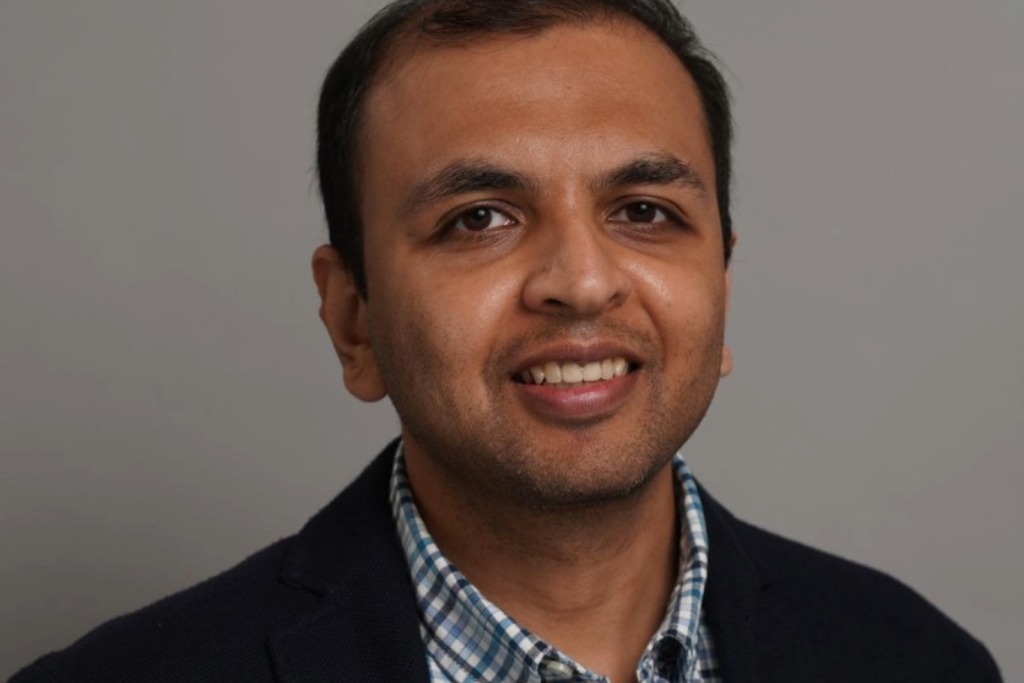
According to Srikrishnan Ganesan, Co-Founder and CEO of Rocketlane, the rise of enterprise AI has exposed a deeper truth about how software actually creates value. Products do not deliver outcomes on their own. People, processes, and implementation still sit in the critical path.
And in that environment, services are no longer peripheral. They are becoming the system through which value is realized. Your deployment is your differentiation.
“The world has made a 180 degree turn,” Ganesan said. “Especially with enterprise AI, it is hard to implement. Every company is now investing in how they guide customers to outcomes, not just how they ship features.”
From coordination software to execution infrastructure
Rocketlane operates in a category often described as Professional Services Automation, or PSA. Traditionally, these tools have focused on planning, measurement, and coordination. Resource management, project tracking, time logging, and billing.
Ganesan sees that definition as incomplete.
“The tools in the space are about planning the work, staffing the work, measuring the work, tracking the work,” he said. “We asked a different question. What if software actually did the work?”
That shift in framing has shaped Rocketlane’s product direction. Instead of stopping at orchestration, the company is building systems that actively participate in delivery.
That includes agents that can not just generate project plans, but produce the documentation, handle data migrations, configure systems, and validate outputs. In other words, work that would have historically required billable human hours.
Internally, Ganesan describes this as a three layer transformation happening across software companies.
The first layer is operational. How the business is run. How services teams are staffed, measured, and managed.
The second is delivery. How projects are structured, tracked, and communicated.
The third is execution itself. The actual work that moves a customer from onboarding to outcome.
Most tools in the PSA category, he argues, have focused on the first layer, and maybe partly the second layer. Rocketlane is trying to operate across all three with robust offerings for each layer.
The new constraint is not labor. It is judgment.
As more of the mechanical work becomes automated, the bottleneck inside services organizations starts to shift. It is no longer just about capacity. It is about decision making. Ganesan does not believe services become autonomous in this model. Instead, the role of the human changes.
“The human in the loop is still responsible for the outcome,” he said. “They are guiding the system, iterating with it, aligning the customer, and deciding what the right solution actually is.”
That distinction matters because it reframes what expertise looks like inside modern software companies.
If AI can increasingly take on how implementation activities are performed, whether that is configuring systems, handling data transformations, or executing validation and testing, then the scarce resource becomes something less tangible. Context. Judgment. Reference architectures. The ability to translate a customer’s needs into the right approach and guide them through it.
In that sense, services teams begin to look less like execution engines and more like strategic operators.
Standardization without losing the customer
One of the longstanding tensions in service organizations is the balance between standardization and customization. Too much standardization can make customer experiences feel rigid. Too much customization can make delivery unpredictable and difficult to scale. Rocketlane’s approach is to treat standardization as a foundation, not a constraint.
“You want to have playbooks, templates, and a clear methodology,” Ganesan said. “That gives you a starting point. But you still allow customization on top of that based on the customer.”
In practice, that means creating systems that encode best practices while leaving room for variation. A structured baseline that can flex rather than a rigid process that must be followed exactly.
It is a subtle distinction, but one that becomes more important as services teams expand and AI begins to take on a larger role in execution.
Choosing the market before building the product
Before Rocketlane, Ganesan built his first startup Konotor. Konotor was acquired by Freshworks, which grew into a publicly traded company. That experience shaped several decisions he made the second time around.
The most important, he says, was market selection.
“The market trumps everything else,” he said. “If you do not pick the right market, execution and product quality will not matter.”
That belief influenced both timing and product strategy. Rather than launching a minimal product quickly, Rocketlane spent its first year building a more complete and differentiated platform before going to market.
The reasoning was simple. Early customer feedback tends to pull products toward familiar patterns. Launch too early, and you risk becoming a slightly better version of what already exists. “We did not want to get pulled into building just another project management tool,” he said. “We wanted customers to see the full vision.”
That approach also extended beyond the product itself. Rocketlane began investing in brand, community, and events well before most companies at its stage typically would. The company launched its own community months before releasing its product and has hosted an annual conference almost every year since. The goal was not just to sell software, but to shape how the category is understood.
Redefining the category itself
Part of Rocketlane’s challenge is that the market it operates in is still loosely defined. Professional services software is often framed as a digitization layer. A way to track and manage work more efficiently. Ganesan believes that framing undersells both the size of the opportunity and the direction the category is heading.
“The market has been defined around digitization, not automation,” he said. “When you move toward true automation, the size and importance of the category look very different.”
That shift requires more than product development. It requires education.
Many younger companies, he notes, do not yet recognize services as a strategic function. They see it as something to minimize rather than something to invest in.
Changing that perception is part of the work.
Building a software company that behaves like a media company
Alongside its product and category positioning, Rocketlane has taken an unusually deliberate approach to brand. Ganesan describes the company not just as a software business, but as something closer to a media platform as well. “We ask ourselves, are we just building a product, or are we also building a media company?” he said.
That mindset shows up in how the company operates. Rocketlane runs multiple communities, produces its own content platform (Rocketlane TV), and invests heavily in events and storytelling.
It has also experimented with more unconventional campaigns, including music driven launches tied to fundraising announcements. The intent is not just visibility. It is narrative control.
In a category that is still being defined, the companies that shape how people think about the problem often have an advantage over those that simply build within existing definitions.
At its core, Rocketlane is built around a simple idea. Software adoption is no longer the end goal. Outcomes are. As enterprise AI becomes more powerful, the gap between what products promise and what customers actually achieve is becoming more visible. Closing that gap requires more than better features. It requires better execution. And execution, in most cases, still runs through services.
That is the shift Ganesan is betting on. Not that services will disappear, but that they will become more central, more automated, and more strategic at the same time. Or, as he frames it, the transition from a feature driven world to what he calls the “outcome era.”
