


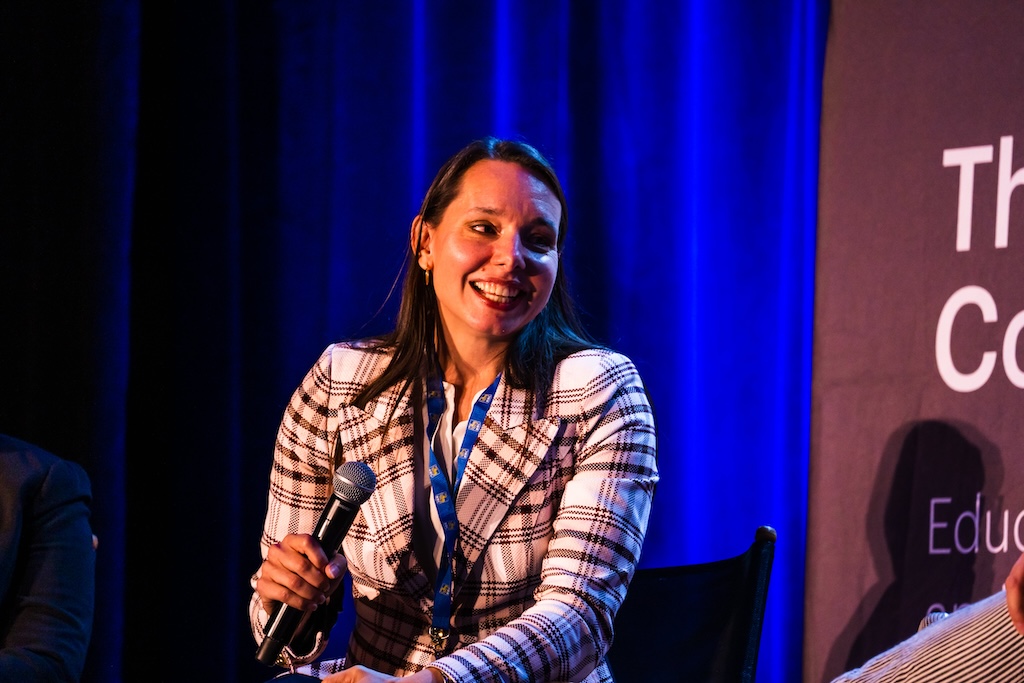
Dr. Lindy Ledohowski, EssayJack founder who successfully exited through its acquisition by Wizeprep.
For founders, thinking about an exit often starts too late. By the time a company is preparing for an acquisition or considering a sale, many of the decisions that determine its value have already been made. Capital structure, defensibility, financial discipline, customer concentration, growth strategy and even the decision to acquire another company can all shape what a business is ultimately worth.
That is the thinking behind TechExit.io Toronto 2026, taking place October 15 at the MaRS Discovery District in Toronto.
The conference brings together technology founders, investors, acquirers and operators to examine how companies can create enterprise value long before a transaction is on the table.
The central idea is straightforward: value creation is the discipline. Acquisitions, exits and optionality are the outcomes.
For founders, that means understanding what capital rewards, what makes a company defensible, how acquisitions can accelerate growth and which financial decisions can strengthen a future transaction.
There are plenty of Canadian founder stories that illustrate this approach. Dr. Lindy Ledohowski, co-founder of academic writing software company EssayJack, built the company alongside Dr. Rueban Balasubramaniam before it was acquired by Wizeprep in 2021. EssayJack was subsequently integrated into the Wizeprep platform as Wize Writer.
Ledohowski’s journey offers one example of the different paths available to founders after building a technology company. Following the acquisition, she joined Wize’s leadership team as Vice President of Operations. Today, she is also a VP at RBCx, bringing experience from both the founder and technology ecosystem sides.
Her story reflects a broader theme at TechExit.io: building a company is not simply about reaching an exit. It is about creating enough value and leverage that founders have meaningful choices about what comes next.
Building Value Before the Exit
For technology founders, enterprise value is rarely created by one decision. It is built over years through a combination of growth, defensibility, capital efficiency, financial architecture and strategic decisions.
TechExit.io Toronto will explore what sophisticated investors and acquirers actually look for when evaluating a company, and what founders can do while they still have time and leverage to improve those fundamentals.
One of the conference sessions, “Why Two Similar Companies Receive Very Different Valuations,” addresses a question most founders eventually run into. Two businesses with similar revenue and growth can command very different prices. The session examines the operational, financial and strategic characteristics that separate an average company from an exceptional acquisition target.
Another, “Negotiating from Strength: Creating Leverage Before the Process Begins,” looks at how that leverage is built long before a transaction starts, through stronger positioning, preparation and strategic decisions around capital, growth and potential acquisitions.
What the AI Shift Means for Software Companies
AI is not only changing how software gets built. It is changing where capital flows, which companies earn a valuation premium and what buyers consider durable.
Michael Hyatt leads “Beyond the Hype: The New Rules of the Tech Exit in an AI-Obsessed Market,” a look at how the exit environment has shifted and what founders of SaaS and technology companies need to understand about creating value in this market.
A related session, “The AI Reset: What Software Companies Must Become,” goes further into the operating side of that change.
AI is reshaping software economics, customer expectations and competitive advantage, and the conversation explores how founders are adapting their businesses, rebuilding moats and creating durable enterprise value in an AI-native market.
For founders, the practical question is less about whether the market has changed and more about what that change requires of the company they are building now.
How Buyers Think, and What Happens After the Deal
Most founders go through one transaction. The people on the other side of the table go through many.
“The Buyer’s Playbook: How Acquirers Create Value” offers an inside look at what happens after an acquisition closes, and how corporate buyers and private equity firms think about creating value once they own the business. Understanding that gives founders a clearer picture of what buyers are ultimately looking for.
The conference also tackles the less polished side of a transaction. In “The Elephant in the Room: Life After the Deal,” Bryn Jones and Kazi Ahmed go beyond the exit announcement to discuss what happens after a company is sold, including the decisions, realities and lessons founders often only understand once they have been through it.
Taken together, the program reflects the conference’s broader approach. Exit readiness is not about preparing documents when a buyer appears. It is about building a company that is attractive, understandable and financially sound well before any process begins.
Ali Asaria to Chair TechExit.io Toronto
Leading the 2026 conference as chair is Ali Asaria, Founder of Transformer Lab.
Asaria has built companies across several eras of software.
He shipped BrickBreaker to 15 million BlackBerry devices, built Well.ca into one of Canada’s largest e-commerce companies and founded Tulip, where he spent a decade selling mobile commerce technology to enterprise customers during the rise of Shopify and modern retail.
Today, Asaria is co-founder of Transformer Lab, an open-source platform designed to help teams train, fine-tune and own their AI models rather than simply rent intelligence from another provider.
His experience gives him a perspective spanning consumer technology, e-commerce, enterprise software and AI.
His view is particularly relevant as founders consider what creates durable value in the current technology cycle. AI is changing how software is built and consumed, but it is also raising a more fundamental question for investors and acquirers: where will lasting competitive advantage come from?
Asaria’s perspective is that companies building AI, rather than simply consuming it, may be better positioned to create compounding value.
“The best time to think about optionality is before you need it. Whether you eventually raise, acquire, sell or keep building, the work is the same: create a company with real value, real leverage and more than one path forward. TechExit.io is about learning from people who have made those decisions firsthand, so founders can make better ones while the choices are still theirs.”
Ali Asaria, Founder, Transformer Lab & 2026 TechExit.io Toronto Conference Chair
More Than an Exit Conference
Since 2017, TechExit.io has brought together Canadian technology founders, operators, investors and acquirers for conversations around building valuable companies and navigating the decisions that come with growth, capital, acquisitions and exits.
The Toronto 2026 conference continues that focus, with an emphasis on what founders can control before a transaction becomes a possibility.
For startups, that can mean building a stronger moat. For investors, it can mean understanding the characteristics that create durable enterprise value. For potential acquirers, it can mean identifying the businesses that have built genuine strategic advantages.
And for founders, the objective may be simpler than an exit.
Build a company that is valuable enough to give you choices.
TechExit.io Toronto 2026 takes place October 15, 2026, at the MaRS Discovery District in Toronto.
Looking to Attend?
We’ve got you covered. Use the exclusive code FOUNDERS20 to get 20% off your pass.
