


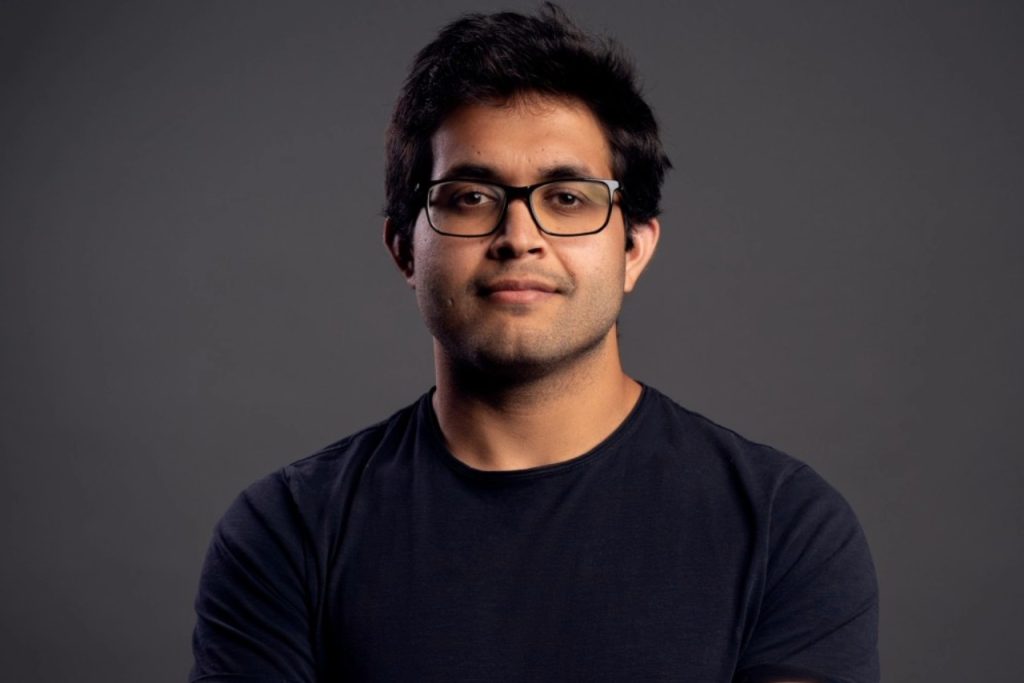
For decades, industrial automation has largely favored the biggest manufacturers. Large companies could afford the engineers, systems integrators, infrastructure changes, and upfront investment required to put robots to work, while smaller factories often remained dependent on manual processes. Rishabh Agarwal, co-founder and CEO of Peer Robotics, believes that divide is increasingly unnecessary. Having grown up around manufacturing before studying mechanical engineering and robotics at IIT Delhi and systems engineering at the University of Maryland, Agarwal saw firsthand that many manufacturers were not resistant to automation. The technology simply had not been designed for the people expected to use it. “It was more like they don’t have skills to make these automation systems work,” he says. “If we really had to scale this industry, we had to figure out that it’s accessible and anyone on the floor can use these technologies.”
That realization became the foundation for Peer Robotics. Founded in 2019, the company develops collaborative autonomous mobile robots for material movement in factories and warehouses, with a particular emphasis on making deployment simple enough for manufacturers without large automation teams. Agarwal’s contrarian bet was that there was a substantial market beyond the massive factories traditionally associated with industrial robotics. “We think that demand is there when it comes to automation for small, mid-market, even factories or warehouses as small as 50, 60 employees,” he says. Large manufacturers will continue automating aggressively, but Agarwal believes easier technology can create a more level playing field, allowing smaller operations to gain access to capabilities that were previously impractical or uneconomical.
Peer’s philosophy is captured by an idea Agarwal has returned to throughout the company’s development: robots should learn from humans rather than requiring humans to learn robotics. Industrial automation has traditionally relied on specialists to configure and program machines for particular environments and tasks. Peer is attempting to invert that relationship by allowing knowledge already held by workers to be transferred to robots. “We don’t think that today we have that general intelligence that could solve for any problem,” Agarwal says. “It’s very important that whatever knowledge humans have, there is some way to transfer it to the robot side.” The practical benefit is not simply a more intuitive interface. If operators can teach machines without waiting for a software engineer to program every workflow, deployment becomes faster and automation becomes viable for a much broader range of businesses.
That approach has become increasingly relevant as physical AI attracts investment and attention across the technology industry. Agarwal is enthusiastic about the advances in AI, sensing, and computing that are making robots more capable, but he is skeptical of evaluating industrial AI solely by what machines can autonomously accomplish today. He believes the more important question is how robots accumulate knowledge and become more useful over time. Humans will still be needed for tasks where AI is imperfect, and companies do not need to “throw robots at every task or every operation.” Instead, Agarwal expects manufacturers to gradually expand automation as systems learn and their economics improve. Operations currently dismissed as too small or specialized for robotics, he predicts, could become viable candidates for automation within the next two or three years.
Peer also sees the robot as more than a machine for moving physical objects. A robot transporting pallets across a facility can simultaneously become a source of operational data. Agarwal points to barcode detection as one example inspired by customer feedback. A robot moving materials could capture information about what it is transporting and feed that data into a warehouse management system or enterprise resource planning platform. For smaller manufacturers that still have significant gaps between their physical and digital operations, automation can therefore become an entry point into a broader digital transformation. “Is it just the physical automation that is going to be of value?” Agarwal asks. “Or can we bring these technologies into the digital world as well, that would add more value?”
Building that value has required Peer to learn a lesson that is easy to overlook from an engineering lab: a robot can perform its assigned task perfectly and still fail as a product. Agarwal says time on factory floors taught his team that automation has to fit the workflows workers already use. If deploying a robot forces employees to repeatedly intervene, learn cumbersome processes, or reorganize the rest of their jobs around the machine, adoption suffers regardless of what management wants. “Even if the manager would say we should use more robots, people on the floor won’t use that,” he says. Peer therefore tries to minimize the behavioral changes required from operators, treating usability and workflow compatibility as core engineering problems rather than secondary considerations.
The same pragmatism shapes how Agarwal evaluates new technology. Peer does not prioritize features simply because they are technically impressive. Agarwal says product decisions begin with measurable customer value: whether a capability can increase throughput, improve the economics of a deployment, or unlock an entirely new use case. That extends to Peer’s commercial model. Agarwal says the company aims to structure automation deployments so customers can achieve a return on investment within six months, with leasing available for customers that prefer a monthly model. For manufacturers considering automation for the first time, the promise is less about owning an advanced robot than being able to demonstrate that the machine improves the economics of the operation.
As physical AI becomes a more crowded field, Agarwal believes another advantage lies in Peer’s decision to control the complete system. Rather than building intelligence that sits on somebody else’s machine, Peer develops its own robots alongside the software and intelligence systems that operate them. “We own the entire stack,” he says. “We make our own robots, we make our own intelligence systems.” That vertical approach is more demanding for a startup, but Agarwal believes integrating hardware and intelligence gives Peer greater control over how quickly it can improve the product and, ultimately, how much value the robot can deliver to customers.
The ambition extends beyond Peer itself. Agarwal sees accessible robotics as part of a larger opportunity to strengthen the U.S. manufacturing base at a moment when manufacturers are confronting labor constraints, reshoring pressures, and growing demands for productivity. The future he describes is not a factory emptied of people. It is one where automation reaches increasingly narrow and specialized workflows, frontline workers can teach machines without becoming programmers, and robots improve alongside the people using them.
For Agarwal, that is ultimately the more consequential promise of physical AI. The winners may not be determined by who builds the robot capable of the flashiest demonstration, but by who makes robotics economically useful in thousands of ordinary factories and warehouses. If Peer Robotics succeeds, automation will no longer be something smaller manufacturers watch their largest competitors deploy. It will become another everyday tool on the factory floor, one that learns from the people around it and is expected to deliver more value the longer it works beside them.
