


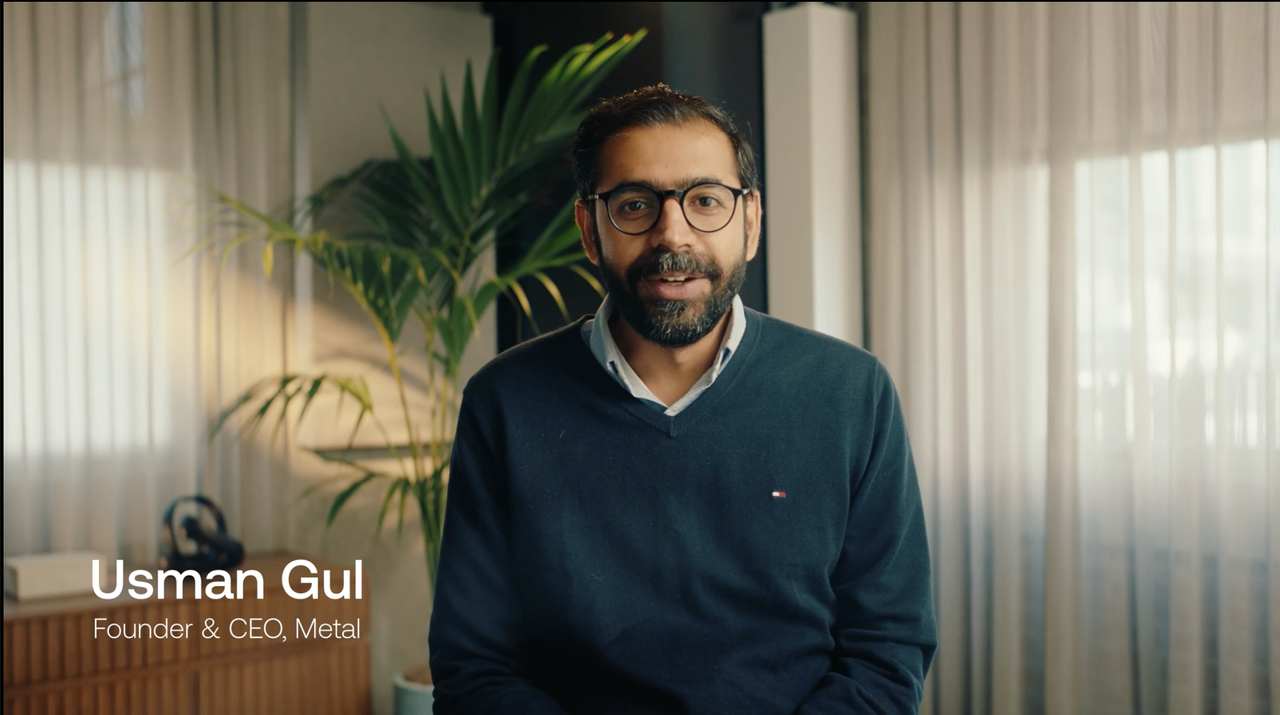
Metal is betting that one of the most relationship driven parts of building a startup can become significantly more intelligent. Founded by Usman Gul, the company is building technology designed to help founders find investors, understand their networks, and ultimately automate much of the fundraising process.
When Gul raised more than $120 million for his previous company, Airlift, he experienced firsthand what nearly every venture backed founder eventually learns. Raising capital is often less about having the best company than finding the handful of investors who truly understand what you’re building. After dozens of conversations that went nowhere, Gul discovered that a small group of investors with deep experience in transportation immediately recognized Airlift’s potential. First Round Capital, an early backer of Uber, led the company’s Series A just weeks after those introductions began. The experience fundamentally changed how he viewed fundraising. “Data and intelligence really, really matter in a fundraising round,” Gul says. “With every round I raised, it was a game of guesswork. You’re just trying to guess which investors might be interested.”
That realization became the foundation for Metal (metal.so), an AI fundraising platform that helps founders discover investors, build fundraising pipelines, understand relationship networks, and automate outreach. While the platform has particularly strong adoption among pre seed through Series A companies, Metal supports founders across fundraising stages.
Rather than simply providing founders with lists of investors, Metal builds proprietary intelligence designed to identify who is most likely to invest based on industry focus, historical investments, published research, portfolio activity, and relationship networks. A founder researching Sequoia Capital, for example, might discover that a former colleague or college roommate previously raised from the firm, creating an introduction path that would otherwise remain invisible. “You don’t know who you know,” Gul explains. “LinkedIn doesn’t tell you that.”
That approach also distinguishes Metal from static investor databases such as Crunchbase and PitchBook. Those platforms can provide valuable information about companies, investors, and previous transactions, but Metal is built around using data to actively guide the fundraising workflow. Its investor discovery technology helps founders move from researching who has invested in a category to determining which investors may be most relevant to their specific company, who in their network could provide an introduction, and how those relationships can translate into an actionable pipeline.
Building that intelligence requires far more than aggregating public databases. Metal combines information from press releases, regulatory filings, proprietary research, subscription data, and continuously evolving AI driven intelligence systems to create what Gul believes is a significantly more complete picture of the venture ecosystem. Instead of treating fundraising as a volume game, the platform helps founders prioritize investors whose interests, thesis, and historical behavior most closely align with their companies. The goal is a more targeted fundraising strategy that reduces wasted meetings while increasing the likelihood of meaningful conversations.
The company’s ambition extends well beyond investor discovery. Gul envisions a future he describes in three words: “one command rounds.” He compares today’s fundraising process to navigating ships centuries ago, when captains relied on memory and landmarks rather than automated navigation systems. Just as modern shipping has become largely autonomous, Gul believes fundraising will increasingly be orchestrated by AI. Founders could eventually instruct Metal to identify ideal investors, build outreach campaigns, schedule meetings, and manage nearly every operational aspect of a financing process with a single command. “I don’t think there are many things in a financing process that cannot be automated,” he says. “It really depends on how much automation a founder wants, but that’s the direction we’re headed.”
The vision appears to be resonating with the startup ecosystem. Metal, which has been backed by Y Combinator and a16z speedrun, offers its SaaS platform alongside Autopilot, a higher touch product designed to automate more of the fundraising workflow. According to Gul, Metal is currently doubling top line revenue every four to six months while engaging with between 5,000 and 10,000 startups annually.
The company has also received third party validation from major startup organizations. In 2025, Techstars partnered with Metal to launch Metal for Techstars, making Metal’s fundraising technology available to Techstars portfolio companies. The partnership provides participating founders with access to Metal’s AI workflows and industry data for identifying likely investors, alongside preferred access and pricing. Metal has also built relationships across the venture ecosystem with organizations including Goodwater Capital, Rebel Fund, Phaze Ventures, and others.
As artificial intelligence reshapes nearly every aspect of software, Gul believes fundraising is approaching its own inflection point. For decades, entrepreneurs have relied on fragmented networks, spreadsheets, static databases, and intuition to navigate one of the most consequential processes in building a company. Metal’s thesis is that raising capital should increasingly become an intelligence problem rather than a guessing game. If that vision proves correct, the next generation of founders may spend far less time searching for investors and far more time building the companies those investors are looking to back.
