


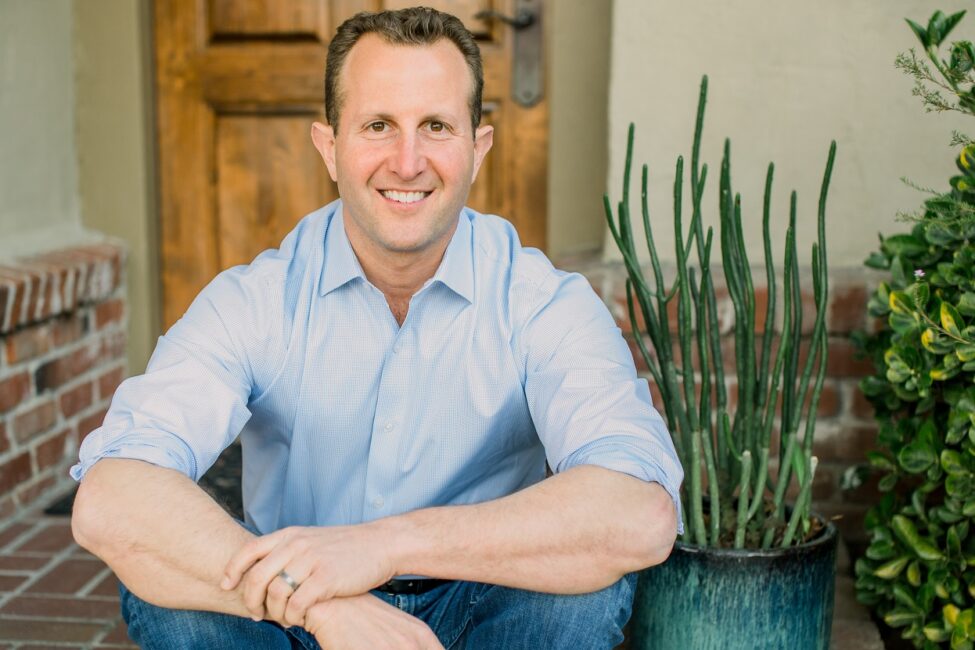
When Paul Shapiro founded an animal welfare nonprofit in high school, he believed shining a light on hidden cruelty would spark change. Thirty years later, the founder and CEO of The Better Meat Co. admits that awareness alone isn’t enough.
“Raising awareness is hardly sufficient to solve a problem,” Shapiro says. “What really changes the game is innovation and entrepreneurship.”
He points to a favorite analogy: in the 19th century, activists fought for better treatment of horses pulling carriages. But it wasn’t policy or campaigns that freed horses from labor, it was Henry Ford. “The automobile rendered their exploitation obsolete,” he says. “I began to wonder: could food technology do the same for cows, pigs, and chickens?”
That question led Shapiro, an animal rights Hall of Famer and author of Clean Meat: How Growing Meat Without Animals Will Revolutionize Dinner and the World, to launch The Better Meat Co. in 2018.
From Advocacy to Entrepreneurship
Shapiro spent more than a decade at the Humane Society of the United States, leading campaigns that pushed corporations and governments to improve animal welfare standards. But he began to see the limits of that approach.
“In a nonprofit, donors give money out of altruism. In startups, investors buy ownership in your company. They want returns,” he says. “It’s a very different kind of accountability.”
For Shapiro, that shift was liberating. Instead of fighting companies, he could partner with them, bringing technology to meat producers who wanted healthier, more sustainable products.
Rhiza: A New Protein for Humanity
The Better Meat Co.’s flagship innovation is Rhiza mycoprotein, a whole-food ingredient grown through fermentation. Unlike plant-based proteins that require milling, extraction, and extrusion, Rhiza comes out of the fermenter naturally meat-like in texture.
Nutritionally, it’s a powerhouse: more protein than eggs, more iron than beef, more zinc than beef, more potassium than bananas, and, most importantly, fiber, something no meat provides.
“Nearly everyone you know is fiber-deficient, but nobody you know is protein-deficient,” Shapiro says. “Rhiza gives you the protein you want and the fiber you need.”
Because it’s a whole food, Rhiza also dodges the “ultra-processed” criticism that dogs many plant-based alternatives. Shapiro is blunt: “This is not processed. It’s simply fermented. And it’s scalable today.”
Building with, Not Against, Big Meat
Unlike brands such as Impossible or Beyond, The Better Meat Co. isn’t focused on competing on grocery shelves. Instead, it’s an ingredient supplier to food companies, both plant-based and traditional.
“Impossible and Beyond have to buy their ingredients from somewhere,” Shapiro says. “We’d love for that to be us. But our customers also include meat companies who can blend Rhiza into burgers or sausages to improve nutrition and taste. It’s a much bigger market than just plant-based.”
That strategy is already reflected on The Better Meat Co.’s cap table, which includes major meat companies like Johnsonville Sausage. “They’re not adversaries,” Shapiro insists. “They’re our partners.”
Scaling Toward Price Parity
In August 2025, The Better Meat Co. closed an oversubscribed $31 million Series A round, bringing total funding to roughly $43 million. The company plans to scale production from a 9,000-liter fermenter to facilities ten times that size, aiming for price parity with U.S. ground beef by 2026.
“We need to scale, and scale flawlessly,” Shapiro says. “But if we do, we can offer a novel crop for humanity, grown in mere hours, with a smaller footprint than animals or plants.”
It hasn’t been easy. The startup survived an IP dispute, the collapse of its bank, and a venture market downturn. “There’s a saying that if you start your own company, you’ll sleep like a baby, waking up every two hours to cry,” Shapiro jokes. On his desk sits a painting of Sisyphus, triumphant at the top of the mountain, the boulder finally at rest. “That’s the conviction you need as a founder,” he says.
A Vision Beyond Profit
For Shapiro, profitability is a necessity but not the goal. He quotes John Mackey, the founder of Whole Foods: “Your body has to make red blood cells to live, but the purpose of life isn’t to make red blood cells.”
“Our mission is to lighten humanity’s footprint on the planet,” Shapiro says. “If we succeed, we won’t just change the way people eat. We’ll literally change the way Earth looks from space, by reforesting land now used for grazing and feed crops.”
Shapiro believes history is on their side. He cites how margarine was once dyed pink to deter consumers, or how “artificial ice” from refrigeration was decried as unsafe. Today, those debates feel absurd.
“Right now, meat means a hunk of flesh from a slaughtered animal. In the future, we may think of meat far more expansively: from plants, from cells, from microbes,” Shapiro says. “And we’ll wonder why we ever did it any other way.”
