


In 2023, while experimenting with ChatGPT, Athena AI founder Shao Hang He stumbled on a frustrating gap: the inability to visualize HTML and CSS outputs directly within the interface. “I had to copy paste my code into Codepen up to 20 times a day,” He recalls. “That annoyance pushed me to build my own GPT wrapper.”
That early version would later evolve into Athena AI—an AI platform that focuses not just on generating responses, but on visualizing outputs and integrating them into collaborative workflows. The name itself is a nod to the Greek goddess of wisdom, a deliberate departure from the more familiar but less ambitious AI names like Siri or Alexa.
Since launch, Athena AI has expanded beyond its roots, rolling out four flagship products: Athena Chat, Athena Board, Athena Agents, and Athena Autopilots. Its whiteboard solution, Athena Board, has already surpassed 2 million installs on Google Workspace, with more than 200,000 active users across the ecosystem.
Designed for prototyping, Athena is gaining ground among entrepreneurs, educators, and teams who need quick flowcharts, wireframes, and brainstorming tools. “You can sketch out an idea solo in the chat interface or build it collaboratively during a Google Meet,” said He.
Everyday Efficiency: From Trip Planning to Prototyping
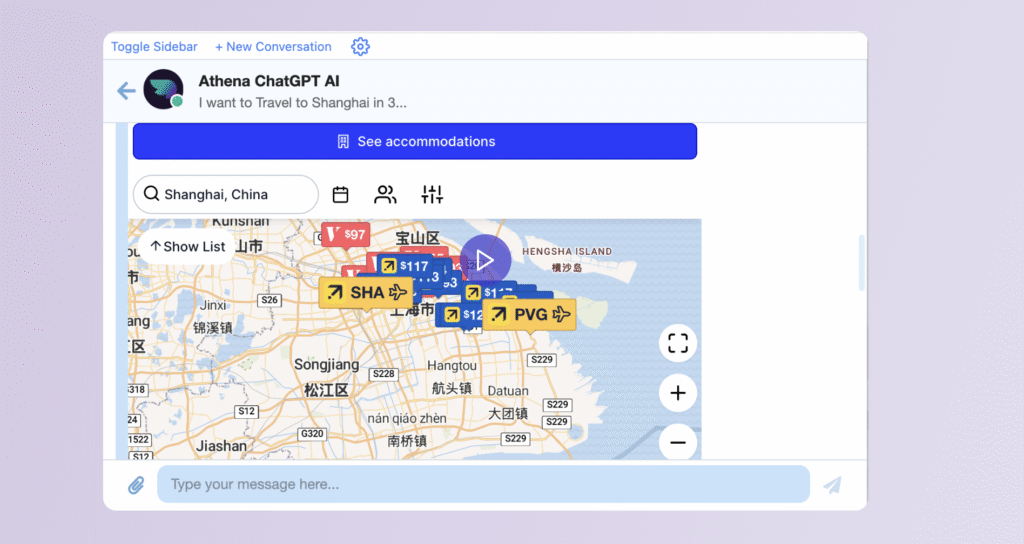
The use cases for Athena range widely. At home, Athena Chat doubles as a personal assistant, capable of trip planning through its Stay22 integration, complete with maps and affiliate booking links. It also offers product recommendations alongside standard AI capabilities such as image generation and real time search.
In professional settings, the tool shines in rapid prototyping whether generating wireframes for product teams, LaTeX formulas for researchers, or onboarding flows for HR. Meanwhile, Athena Agents let organizations build customized assistants for roles like customer support or event guidance. Athena Autopilots push further, automating browser tasks from engaging on LinkedIn to managing event sign ups and responding to WhatsApp messages.
Showcasing AI Innovation Through Competitions
Athena has also become known for its AI competitions, which highlight creative applications of automation. A recent standout winner: Travel Planner AI Autopilot. The tool consolidates scattered travel research open flight, hotel, and activity tabs into a unified, optimized itinerary directly inside the browser. It’s aimed at business travelers, families, and digital nomads, and future iterations promise preference memory and collaborative planning, evolving it into a true digital concierge.
Looking Ahead: Agents, Automation, and Beyond
He is bullish about the next wave of AI, especially browser based and computer agents. “This year, agents can already perform a lot of tasks well enough,” he said. “In the near future, I want to fully automate my day to day operations with AI.”
Looking further out, He sees AI expanding into physical workplaces. “Within the next five years, I believe robots will handle more complex tasks with just a single prompt,” he predicted.
For entrepreneurs navigating the AI boom, He’s advice is simple: experiment widely and learn to prompt effectively.
“Try at least one new AI tool every month and measure the time it saves,” he said. “For non technical founders, learn how to prompt more efficiently. For technical founders, build solutions that can scale with leading AI models.”
In the near term, Athena AI is doubling down on integrations, aiming to plug into platforms like Google, Canva, and Shopify while enhancing the capabilities of its Autopilot agents.
“The focus isn’t just on building smarter tools. It’s on ensuring those tools fit seamlessly into the workflows of businesses and individuals alike,” He said.
As the AI landscape accelerates, Athena AI is positioning itself as more than just another chatbot, it’s a platform for turning ideas into action, one task at a time.