


In a country where housing demand chronically outpaces supply, Galiano Tiramani is betting that the solution isn’t just more land or looser zoning, it’s building homes the way Ford builds cars.
The co-founder and business development lead at Boxabl, Tiramani has turned a decades-old patent for a foldable house into one of the most talked-about housing startups in the U.S. The company’s flagship product, the Casita, is a 361-square-foot modular home that folds down small enough to ship on a standard truck and can be set up in a day. With over 50,000 people on its waitlist and production times measured in hours, Boxabl is positioning itself as a technology company first and a homebuilder second.
From High-Risk Startups to Housing Disruption
Tiramani’s entrepreneurial path was forged in industries where regulations and uncertainty are as much a challenge as the competition.
“I started off with a couple of different companies that were successful. Crypto and marijuana businesses,” he says. “They were both high-risk, tightly regulated industries. I learned a whole lot of lessons about finding an angle to be successful and make money.”
The marijuana venture, in particular, had a surprising parallel to his current work. “It was similar to Boxabl in that we were doing manufacturing. There was a steep learning curve to figure out the technology, ramp up production, and then scale,” he says.
That manufacturing know-how came into play in 2017, when he revisited a folding house concept invented, and patented, by co-founder Paolo Tiramani nearly 20 years earlier. “I said, hey, what about that house idea? Maybe we should do something with it. The timing was right with the market, so we ran with it.”
A Product, Not a Project
Ask Tiramani what makes Boxabl different from the prefab homes of the past, and he’s quick to draw a distinction.
“Our idea is to mass-produce houses in a factory,” he says. “Traditional factory-built housing is expensive to ship because it’s so big. Our house folds up. And we want to mass-produce a system of modules that can stack and connect to meet most needs, from single-family to apartments to ADUs.”
That folding mechanism didn’t come easy. “There’s definitely engineering involved to make it fold, seal up, fit on a truck, and deploy quickly on site. It takes preparation and a lot of thinking to get right,” he says.
Shifting the Sales Model
In Boxabl’s early years, the company focused on selling modules to builders and developers. Now, it’s changing course.
“We’re moving toward handling full projects, from idea to the owner getting the keys,” Tiramani explains. “That includes design, permitting, preparation, install, and site development. We think that’s going to open up a bigger market for us.”
He sees the ultimate model as fully vertically integrated: “The endgame is buying our own land, developing housing, and selling direct to consumers, undercutting pricing where possible. That’s the biggest market.”
Changing the Cost Curve of Housing
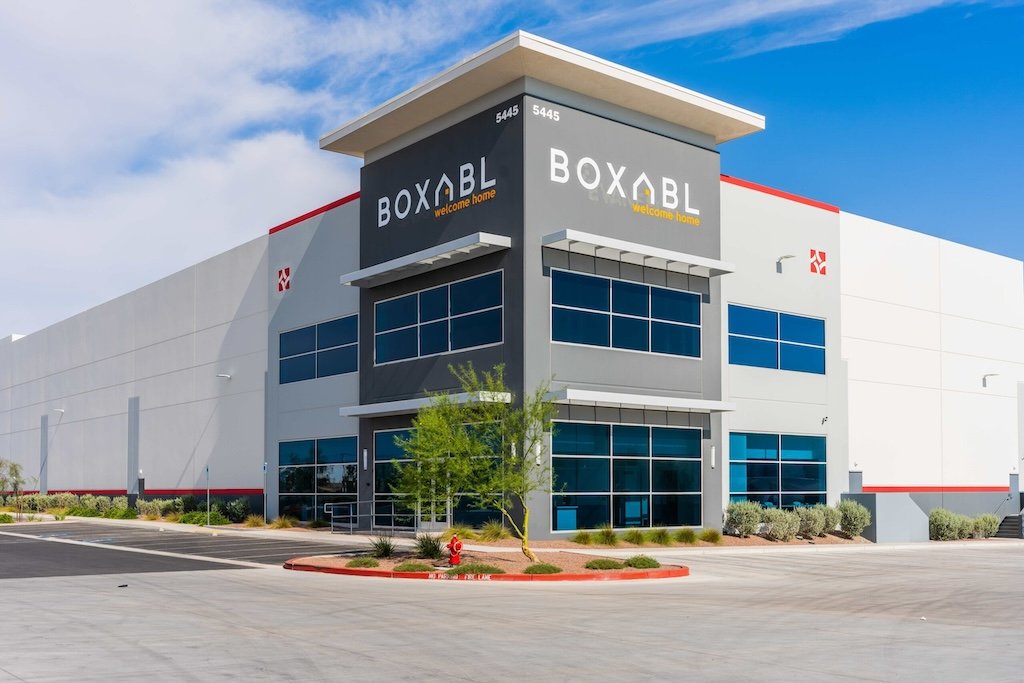
Inside Boxabl’s Las Vegas factory, houses roll off the line at a pace that would have seemed impossible just a few years ago. “We can put out a house every two to three hours,” Tiramani says. “Manufacturing wasn’t really the hard part, we’ve got that dialed in. Assembly lines give you a bigger benefit than automation early on, but down the line, we’ll add more automation to improve the process.”
International demand is already knocking. “Housing is a problem everywhere,” he says. “Our plan is to perfect the factory and product here in the U.S., then replicate it overseas and adapt for local regulations, climates, and materials.”
For Tiramani, the long-term vision is clear. “The goal is to replicate the way automobiles are built in a Ford or Tesla factory,” he says. “If we can scale to that level of mass production, the result will be dramatically lower costs.”