
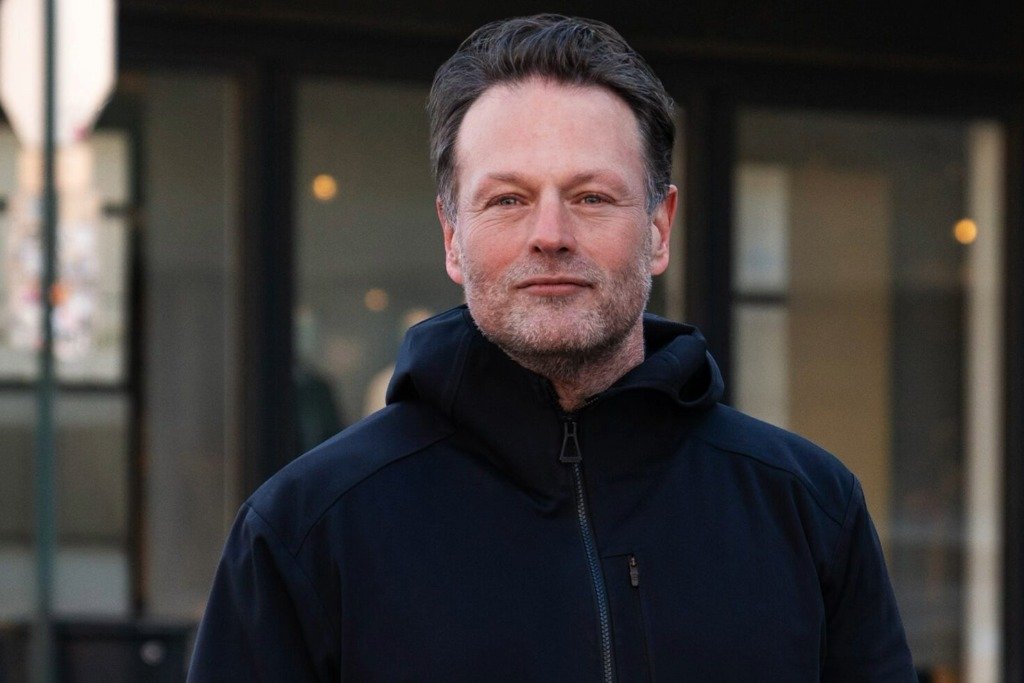
Henrik Werdelin has never been one to follow the script. The Danish-born entrepreneur started his career producing radio shows, publishing school newspapers, and sneaking into TV studios to pitch internet-themed programs in the late ’90s, well before it was trendy. That same bias toward action and creative mischief has shaped his journey from MTV executive to startup studio pioneer to IPO-level operator and now, founder of an ambitious new AI venture studio: Audos.
While best known as a co-founder of Bark, Werdelin is also the architect behind Prehype, a boutique innovation collective that helped corporates and solo founders build lasting businesses for over a decade. Now, with Audos, Werdelin is shifting his gaze to a broader horizon: empowering everyday builders to launch 100,000 AI-powered companies per year.
The Prehype Ethos: Incubation as an Art Form
Prehype was never meant to be a company. It began, as Werdelin puts it, as a “halfway house” for experienced founders who didn’t know what to do next including himself. After selling a company to Facebook and passing through several entrepreneurial cycles, he wanted something in-between: not quite corporate, not quite solo.
What emerged was a collective of seasoned builders who used corporate cashflows to fund their own ventures. While the external brand looked like a startup studio, the internal reality was closer to an artist’s commune that happened to spin out multiple unicorns and a portfolio of lucrative exits.
“We weren’t optimizing for volume,” says Werdelin. “We were optimizing for people who had taste, technical depth, and a drive to keep going, but needed a container for it.”
Corporate Innovation vs. Creator-Led Startups
Over the years, Prehype advised Fortune 500s on internal incubation. But the results, Werdelin admits, were mixed.
“We were much more successful building our own stuff than building for corporates,” he says. “Big companies want to innovate, but the systems aren’t built for it. You end up needing 1,000 people to ship one glasses feature.”
Still, those frustrations became fuel. They clarified what worked: highly motivated individuals solving real problems for real people. That principle, combined with Prehype’s deep methodology, became the seed for his next venture.
Scaling Founding to 100,000 Startups a Year
Audos is Werdelin’s attempt to democratize entrepreneurship at scale. He sees a clear parallel: just as YouTube enabled millions to run their own media channels, Audos can help founders build micro-startups: lean, one-to-two-person companies that solve narrow but meaningful problems.
He calls them Donkeycorns: not unicorns chasing billion-dollar valuations, but small, durable ventures generating $1–2 million annually with a tiny footprint and high authenticity.
“These aren’t viral gimmicks,” he explains. “They’re deeply rooted businesses serving niche communities. An AI agent that helps parents optimize their kids’ social profiles for sports scholarships. Or a mechanic building a quoting assistant so others don’t get ripped off. That’s where the next wave of value lies.”
From Product to Problem to Person
At the heart of Werdelin’s philosophy is a subtle but critical shift: starting not with product or even idea, but with a person and their problem.
“Everyone wants to pitch their idea,” he says. “But we push them to start with: Who do you want to serve for the next 10–15 years? What problem are they facing?”
This customer-first logic forms the basis of Prehype’s internal methodology and Werdelin’s new book, Me, My Customer, and AI. It also shapes the pedagogy behind Audos’ AI agents, which guide new founders through structured ideation, prototyping, and even ad generation, removing much of the friction traditionally associated with startup creation.
The “It Sucks” Philosophy
Inside Prehype and Audos, teams use a shared phrase as shorthand for framing ventures:
“It sucks that…”
“It sucks that job applications feel like a black hole.”
“It sucks that small business owners don’t know how to use AI.”
“It sucks that every SaaS platform overcharges for simple features.”
By anchoring startup ideas in frustration, founders create opportunities that aren’t just viable, but visceral.
The New Moat: Relationship Capital
In a world where AI can build software, write copy, and synthesize research, Werdelin believes the real competitive advantage is relationship capital: the authenticity, density, and durability of a founder’s connection with their community.
“Generic won’t win anymore,” he says. “If you’re average, the models will outperform you. But if you’re original, if you bring taste, ethics, and creative specificity, then AI becomes your Iron Man suit.”
That’s what Audos is betting on: that the next great wave of companies won’t come from traditional incubators or VC factories, but from solo builders who deeply understand a problem, use AI as a co-pilot, and grind like Donkeycorns to bring it to life.