

Mobile development has become one of the great paradoxes of modern software. Phones dominate global computing, yet the process of building mobile features remains slower, harder, and less flexible than building for the web. While AI coding tools have accelerated development across many domains, they stall on mobile tasks because they cannot validate what they create. They cannot see the screen. They cannot test a gesture. They cannot confirm that an interface actually matches a Figma file.
For Nicolas Dehandschoewercker, co-founder and CEO of Minitap, this gap was not an abstract inefficiency. It was the difference between a startup that could iterate on insights and one trapped by the natural drag of mobile engineering. His conclusion was simple. If AI cannot observe the phone screen, it cannot close the feedback loop. And if the feedback loop is broken, mobile development will continue to move at a fraction of the speed of everything else in software.
Minitap was built to solve exactly this problem.
A Slow Problem Revealed Early
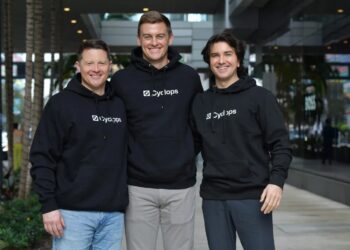
Nicolas and his co-founder, Luc Mahoux-Nakamura, began building mobile apps together as teenagers in a small village in rural France. Through that experience, an unavoidable reality became clear. Mobile development was painfully slow.
“It was not that we were bad mobile engineers. It was that mobile is fundamentally slower. We could not pivot fast enough. We could not experiment fast enough. And AI tools did not help. They did not work on mobile tasks at all,” Nicolas explains.
When the pair tried to use popular AI coding assistants, the tools broke down immediately. They generated code blindly, unable to validate the results. Screens did not match designs. Buttons did not sit in the right place. Navigation logic broke across different devices. The AI had no sensory interface with the phone.
This led to a simple insight that would become the foundation for the company. The bottleneck was not code generation. The bottleneck was feedback.
Rebuilding the Feedback Loop
Minitap began as an internal dev tool that Nicolas and Luc built for themselves. They needed a way for AI to interact with a real device, observe the output, and correct mistakes. They needed the AI to behave like an engineer holding a phone.
This required solving a technical problem that many teams had attempted but failed to crack. Mobile interfaces are more complex than the web because they include gestures, momentum, and non-text UI elements. A clock app carousel that slows down with momentum, for example, is trivial for a human and incredibly difficult for an agent to control.
On the web, AI can rely on the DOM for structure. On mobile, the only available information is a screenshot.
“You have to teach the agent how to tap, scroll, pinch, and even slow a swipe to the exact right number,” Nicolas says. “These interactions took humans years to master. Teaching them to an AI is not trivial.”
Despite the challenge, the Minitap team surpassed every benchmark. Only weeks after starting the project, they topped Google DeepMind’s Android World performance test and became the highest ranked agent globally. Their open-source framework spread quickly and established Minitap as a technical leader in mobile control and feedback systems.
From Breakthrough to Product
With a world-class interaction layer in place, the team expanded the system into a full development workflow. Minitap now integrates with AI coding tools like Cursor and Claude Code and supplies the missing ingredient: real-time device feedback.
Engineers can spin up iOS and Android devices in the cloud, run the AI generated build, and compare the output to a Figma design. The system checks for visual accuracy, functional correctness, and device compatibility. If something breaks, the AI iterates automatically until the result is pixel perfect.
“Today we target engineers. They get code review, context, and fine-grain control over every change. Eventually this becomes an experience that a non-technical product team can use to ship features directly to customers,” Nicolas says.
Users can already attach a Jira ticket with a Figma link and functional spec. Minitap can produce the full feature in a single pass. The system writes the code, validates the output, tests across devices, and produces a clean set of changes for human review.
Early feedback exposed an interesting insight. Some developers did not want the system to generate a complete feature in one step. They wanted a higher sense of control over planning and implementation. Minitap responded by adding more granular development pathways that give engineers the steering wheel while still accelerating the work beneath them.
The Market Pull and the Coming Shift
Mobile-first consumer companies have already begun adopting the platform. Growth teams see the appeal intuitively. The faster you experiment, the more you win. But enterprise adoption will require a cultural shift. High-agency tools challenge traditional development processes, especially for teams used to long QA cycles and strict review gates.
Nicolas believes the shift is inevitable. Customer insights come from product and design teams, not engineering. When those teams can ship improvements in one day instead of one month, every company that relies on mobile engagement gains an advantage.
“The teams that experiment the fastest win. That is true today and it will be even more true with AI,” he explains.
Building Toward a Category-Defining Future
Minitap recently raised 4.1 million dollars to accelerate hiring and product development. His strategy is focused entirely on building the best mobile development platform in the world.
The company is now building a mobile native, AI native IDE that will integrate the entire workflow. It will allow engineers, and eventually non-technical teams, to design, generate, validate, and ship features with an unprecedented degree of automation.
“We want to own the category. We want to be the IDE for mobile,” he says. “Everything else is a function of product quality.”
That vision is grounded in a simple belief. If computers can learn to understand mobile interfaces as well as humans do, they can build for them as well as humans do. And if they can build for them, they can iterate far faster than any engineering cycle that exists today.
Minitap is not just accelerating mobile development. It is rewriting the speed limit entirely.