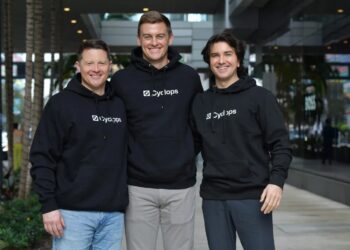


When Kush Bavaria speaks about compute, he talks like a trader describing oil in the 1970s, a scarce, misunderstood resource about to become the backbone of a new global economy. As the co-founder and CEO of Ornn, Bavaria is building what he calls “the world’s first institutional-grade market for compute futures.” In plain English, Ornn is transforming GPU capacity, the raw material of artificial intelligence, into a transparent, tradable financial asset.
“Compute powers the AI economy,” Bavaria explains. “But until now, its price has been unhedged and unpredictable. We’re building the tools for people to gain exposure to, or reduce exposure to, a commodity they don’t actually own.”
From Private Equity to the Compute Exchange
Bavaria’s journey into the economics of compute began almost accidentally. He and his co-founder, Wayne Nelms, a former equity options trader at Susquehanna International Group (SIG), were initially consulting for private-equity firms. Those clients, many of whom were lending to data centers, raised a problem Bavaria couldn’t ignore: there was no way to manage risk in GPU infrastructure financing.
“These firms were saying, ‘We’re lending to all these data centers, but we have no way to hedge the risk,’” he recalls. “We realized there was no equivalent of an oil futures contract for compute, even though it’s become one of the most important commodities in the world.”
That insight became Ornn’s origin story. The company’s mission: to design a financial instrument that could let data-center operators, AI labs, and investors manage exposure to the volatile costs of compute.
The Problem With Today’s Compute Market
In the current ecosystem, pricing for GPU access is opaque and relationship-driven. Large cloud providers quote “rack rates” through public APIs, but those numbers often have little to do with what customers actually pay.
“Everyone’s using offer data from AWS or Azure,” Bavaria says. “But that’s not the price anyone pays. You have to call them, structure a deal, negotiate discounts. It’s all off-market.”
The result is a trillion-dollar global buildout of AI data centers, with no reliable benchmark for the underlying asset. Bavaria saw parallels to the pre-modern oil market, where pricing opacity stifled efficiency and capital allocation.
Ornn’s solution is to build transparent benchmark indices that track the fair-market cost of compute across providers, geographies, and GPU classes (H100, A100, B100, etc.). Those indices then underpin cash-settled futures and swaps, allowing institutions to hedge or speculate without ever touching the physical hardware.
Inside the Index
Ornn’s methodology remains proprietary, but Bavaria describes its basic structure: separate indices for major GPU families (H100, A100, 3090), each weighted by performance and price data from partner sources.”
“Our goal is to make the index anti-manipulative, transparent, and verifiable,” he says. “If you’re trading on it, you can replicate it yourself. We’ll give you the methodology.”
Currently, Ornn operates under the CFTC’s de minimis exemption as a swap dealer, legally structuring over-the-counter trades while it works toward a Designated Contract Market (DCM) license, a crucial step toward becoming a fully regulated U.S. exchange.
The Market Opportunity
The timing could not be sharper. The world’s largest tech companies, from OpenAI and Anthropic to Meta and xAI, are in a GPU arms race that has sent prices soaring and availability crashing. Nations are treating compute as a matter of national security.
“Chips are already being traded for bargaining power between countries,” Bavaria notes. “That volatility is only going to grow, and the only way to manage it is through a futures market.”
In Bavaria’s analogy, data centers are the oil rigs of this new economy, while AI labs and hedge funds are the airlines and speculators that buy contracts to lock in prices.
“If you own the GPUs, you sell futures to hedge depreciation. If you’re training models, you buy futures to lock in cost predictability.”
A Quantitative Team With a Markets Mindset
Despite its small size, Ornn’s team punches above its weight. All four members are MIT alumni with backgrounds in math, computer science, and quantitative trading.
- Wayne Nelms (Co-Founder & CTO): former SIG trader, ex-Google engineer
- Andrew Kessler: former quant researcher at Optiver
- Jack Minor: ex-consultant at BCG
- Kush Bavaria: former investor at Link Ventures and machine-learning researcher at MIT CSAIL
“We don’t think of this as an engineering problem,” Bavaria says. “Every new market is a behavioral problem, how traders think, how institutions manage risk. So we hire people who understand markets first.”
That mindset shapes their execution philosophy: build an institutional-grade product first, and resist the temptation to chase retail hype.
Internally, Ornn measures success by two things: volume and trust. “Volume tells you the market believes in your contracts,” Bavaria says. “Trust comes from transparency, a methodology the largest banks can audit and trade against.”
While he doesn’t share current numbers, he confirms the CFTC allows Ornn to transact up to $8 billion in notional swap volume under its exemption, a threshold the team aims to approach as it finalizes its DCM approval.
The roadmap moving forward involves grow data partnerships, executing swap trades, and transitioning to a regulated exchange. After compute, Bavaria sees opportunities to apply Ornn’s framework to other digital infrastructure markets, but for now, he’s laser-focused on GPUs.
“Compute is the largest resource of our time,” he says. “Every model, every application, every data center depends on it. We want to make it liquid, transparent, and investable.”