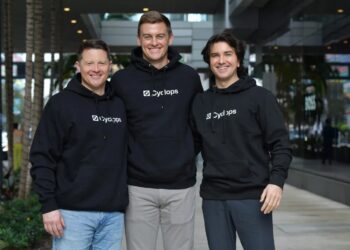


When Chris Ellefson founded Ollon, he wasn’t looking to build another software shop in a crowded market. With over 20 years leading technology teams across industries—health care, media, food delivery, marketing, legal, and machine learning—Ellefson saw a clear need as Toronto’s tech landscape shifted.
“At that time, Toronto had very few mid-sized technology companies,” Ellefson shared. “Large corporations were acquiring firms or moving development offshore, while a wave of small startups needed senior technical leadership but couldn’t afford a full-time hire.”
Before “fractional CTO” became a buzzword, Ellefson recognized the opportunity to deliver hands-on, strategic guidance to early-stage companies, expanding into a Canadian-based, client-facing software development team focused on real business challenges.
Standing Apart in a Crowded Market
While many agencies default to offshore models or narrowly defined technology stacks, Ollon takes a different route: a fully Canada-based, customer-facing team capable of working across a wide range of technologies. This flexibility enables Ollon to excel in projects with evolving requirements and ambiguous scopes, fostering deep collaboration and producing solutions that align with a client’s business goals rather than simply delivering code.
“We tailor our approach to fit each unique context,” Ellefson noted. “We align with your tools and workflows, focusing on the real business challenges you’re trying to solve.”
A Flexible Toolbox Over a Rigid Playbook
Understanding a client’s unique needs isn’t a checkbox process for Ollon. The team integrates seamlessly into clients’ existing processes, treating themselves as an extension of the client’s organization while carefully selecting technical solutions that align with business objectives.
This practical, context-aware approach has helped founders avoid one of the most common pitfalls Ellefson sees in the ecosystem: overbuilding MVPs.
“More often than not, founders add too many features, overspend, and delay launching the MVP. This postpones the critical feedback loop needed to refine the product,” Ellefson explained.

The Role of AI: An Accelerant, Not a Replacement
Ollon is not only building with AI but also advising clients on how to leverage it intelligently. Tools like Cursor, which Ellefson describes as “like working with a very fast intern,” are part of Ollon’s workflow, automating repetitive tasks so senior engineers can focus on architecture, planning, and quality.
Ollon is also excited about Locofy, an AI-powered tool that transforms Figma designs into clean, production-ready, componentized code for frameworks like React and Vue. While it requires additional design-phase structure, it significantly reduces development time without compromising code quality.
“Locofy doesn’t use LLMs; it’s specifically trained on front-end design and code, producing consistent output without the hallucination issues you see with other AI tools,” Ellefson said.
The Future of Custom Software
As off-the-shelf solutions evolve, the definition of “custom software” is shifting. The rise of reusable components, APIs, and AI tools means developers can focus on building systems that bridge the gaps between standardized tools and business-specific needs. This also means fewer greenfield projects and more modernization of existing systems, with a growing emphasis on strategic thinking, collaboration, and communication over heads-down execution.
“There’s a misconception that AI will replace developers,” Ellefson noted. “In reality, the developers who think strategically and communicate effectively will be more in demand than ever.”
Ollon is doubling down on fractional leadership and flexible, high-performance delivery, expanding CTO advisory, technical audits, and a partnership ecosystem that enables companies to access expert leadership without the overhead of full-time hires. Some upcoming initiatives include co-branded partnerships with Locofy and other innovative platforms. The team will also have a presence at North American innovation summits and will integrate into founder support programs at accelerators, VC firms, and innovation hubs.
Ellefson’s vision is to position Ollon as the preferred product and leadership partner for early-stage and scaling tech companies, providing everything from MVP development to project rescues while maintaining a people-first approach in a market often dominated by automation and outsourcing.
As the industry grapples with AI’s impact, data privacy risks, and shifting geopolitical realities, Ollon is positioning itself as a trusted, local alternative to offshore development—helping organizations build smart, secure, and intentional software while investing in the growth of Canadian tech talent.
“Whether it’s helping founders bring their products to market faster or supporting partners in navigating the ever-changing technical landscape, we’re here to build solutions that matter,” Ellefson emphasized.
In an era where technology moves fast and talent is global, Ollon is proving that human-focused, context-driven software development still has a critical role to play—and that’s exactly what the future needs.