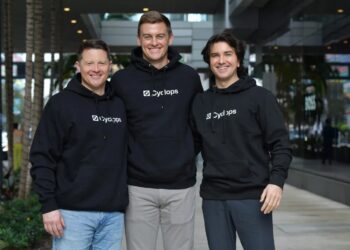


Before Victor Hunt became the co-founder and CEO of Zingage, he was a kid on the side of a highway, helping his family sell whatever they could to survive. He grew up in a turbulent household, one that introduced him early to hardship, responsibility, and the reality that systems meant to care for people often fail them.Those experiences shaped everything that followed.
In school, Victor apprenticed under a landlord managing low-income housing. Later, his mother suffered a traumatic brain injury, exposing him to the chaotic, fragile ecosystem of home healthcare.
“I grew up around the healthcare space,” he says. “When you see how much of it actually happens in the home, not in hospitals or clinics, you realize that’s where the real system needs to be built.”
That realization stayed with him long after founding and exiting Astorian, his first venture that connected property managers with contractors. The common thread between Astorian and Zingage, he explains, is operational empathy: “I’ve always been obsessed with the unseen logistics, the people doing the work, the ones holding everything together but getting none of the credit.”
When his mother’s condition worsened and he began spending more time around caregivers and home health aides, Victor saw the same patterns repeating, overworked people, broken coordination, and a fragile layer of back-office operations that determined whether patients lived or died.
The Moment That Changed Everything
The turning point came from a story Victor’s grandmother once told him.
A licensed nurse who ran a home care agency for decades, she described visiting one of her clients and finding a patient lying weak and dehydrated on the sofa while the caregiver sat nearby, exhausted and disengaged, overwhelmed by a system that had already failed her.
The patient’s care plan hadn’t been followed. No one was tracking fluid intake. The back office was juggling emergencies from other homes, and there were no alerts or oversight to catch the lapse. The woman was simply lost in the cracks of an uncoordinated system.
“When my grandmother told me that story, it hit me,” Victor recalls. “The caregivers aren’t to blame. They’re unsupported. The system fails them long before they ever fail a patient.”
That conversation became the spark for Zingage, a realization that if healthcare was going to move into the home, it needed new infrastructure to support the humans making it possible.
Healthcare Belongs in the Home
Zingage’s mission, “healthcare belongs in the home”, is both a statement of intent and a reflection of modern reality. Nearly 25% of dementia patients live alone. More than 28% of seniors in the U.S. do too. Meanwhile, families are dispersing geographically. Children chase careers in New York or San Francisco while their parents age alone in Louisville or Tampa.
“The family unit has changed,” Victor says. “We can’t rely on proximity anymore. But we can use technology to rebuild the support that proximity used to give.”
Zingage isn’t a medical device company or another scheduling tool. It’s what Hunt calls an AI operator. A software that runs the coordination layer of home care agencies: scheduling, intake, billing, compliance, and crisis management.
The platform’s automation system can handle everything from last-minute call-outs to documentation workflows, reducing operational overload so caregivers can actually focus on care. But unlike most automation startups, Zingage’s engineering philosophy is radically grounded in human reality.
Hunt and co-founder Daniel Tian worked for months as schedulers themselves before writing a single line of production code.
“You can’t build empathy into software unless you’ve lived the pain yourself,” Victor says. “We weren’t observing. We were doing the job.”
That experience influenced Zingage’s architecture, from its multi-tenancy isolation to its structured ID system that prevents data crossover between agencies, all built for transparency, safety, and trust.
Strategic Growth & The Axxess Partnership
Zingage’s $12.5 million seed round, led by Bessemer Venture Partners with participation from TQ Ventures and South Park Commons, signaled investor belief in the home care revolution. The company already powers over 400 agencies and supports more than 50,000 caregivers.
A recent partnership with Axxess, one of the largest home health software platforms, has expanded Zingage’s reach even further.
“Axxess understood our mission immediately,” Victor says. “They know that every extra minute an agency spends on admin is a minute stolen from patient care.”
To investors, Zingage represents not just a software play, but an infrastructure layer for the “care economy.” To Victor, it’s much simpler: “We’re building the nervous system for how America actually cares for its people.”